Choose language / Korean

EN / 한
US Has No Plan To Renew Iranian, Russian Oil Waivers, Bessent Says
Bull/Bear Index 44.9/100
macro ▼ Bear Impact 90/100 ZeroHedge Apr 27, 2026 Read original ↗

US Has No Plan To Renew Iranian, Russian Oil Waivers, Bessent Says

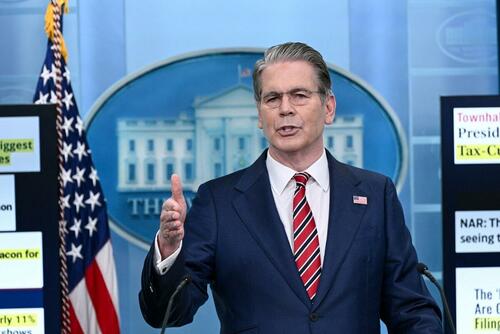
Authored by Kimberley Hayek via The Epoch Times, U.S. Treasury Secretary Scott Bessent said on April 24 that the United States will not renew the sanctions waivers that enabled buyers to take delivery of Iranian and Russian crude already loaded on tankers at sea. Bessent said a one-time license covering Iranian oil on the water would not be extended, calling it “totally off the table.” The parallel waiver for ...

How this call is verified

The ▼ Bearish call is auto-verified against the actual S&P 500 price shortly.

Bar: S&P 500 ±0.3% within 24h · every verdict lands on the public ledger

Key takeaway

"US Has No Plan To Renew Iranian, Russian Oil Waivers, Bessent Says" — BullBear's AI rates this story as a bearish (negative) signal for markets, with a market-impact score of 90 out of 100. Authored by Kimberley Hayek via The Epoch Times, U.S. Treasury Secretary Scott Bessent said on April 24 that the United States will not renew the sanctions waivers that enabled buyers to take delivery of Iranian and Russian crude already loaded on tankers at sea. Bessent said a one-time license covering Iranian oil on the water would not be extended, calling it “totally off the table.” The parallel waiver for ... Reported by ZeroHedge on April 27, 2026. The call is verified against the actual 24-hour price move on BullBear's public conviction ledger.

Catch the next bear flag

Telegram alerts when our AI scores a story 80+/100 impact (~1-3 per day, no spam). Verified 30d hit rate 53.3%.

Join Telegram channel

📡 Tomorrow's Watch

Related news

▼ Bear
75/100
Google News Macroeconomics (EN) 1h ago

Gold softens on prospects of Fed rate hikes as Brent tops $100 - CNBC

Rewritten: Gold dips as Fed hikes loom; Brent crude exceeds $100.

Gold prices are softening due to the prospect of Federal Reserve rate hikes, while Brent crude oil has surpassed $100 per barrel.

Elevated crude oil prices, with benchmarks like Brent exceeding the $100 per barrel mark, are contributing to broader inflationary concerns. Such persistent price pressures increase the likelihood of the Federal Reserve adopting a more restrictive monetary policy stance, potentially through further interest rate increases. This outlook for higher borrowing costs directly impacts the attractiveness of gold. As a non-yielding asset, gold becomes less competitive when compared to instruments that offer a return, particularly in an environment of rising interest rates. Consequently, the confluence of sustained inflation and the anticipation of tighter monetary conditions creates a challenging economic landscape. This scenario may encourage investors to adopt a more conservative approach to their portfolios, potentially shifting away from riskier assets and towards more defensive strategies as they assess the potential impact on economic growth and corporate profitability.

Elevated crude oil prices, with benchmarks like Brent exceeding the $100 per barrel mark, are contributing to broader inflationary concerns. Such persistent price pressures increase the likelihood of the Federal Reserve adopting a more restrictive monetary policy stance, potentially through further interest rate increases. This outlook for higher borrowing costs directly impacts the attractiveness of gold. As a non-yielding asset, gold becomes less competitive when compared to instruments that offer a return, particularly in an environment of rising interest rates. Consequently, the confluence of sustained inflation and the anticipation of tighter monetary conditions creates a challenging economic landscape. This scenario may encourage investors to adopt a more conservative approach to their portfolios, potentially shifting away from riskier assets and towards more defensive strategies as they assess the potential impact on economic growth and corporate profitability.

#macro
▼ Bear
75/100
Google News Macroeconomics (EN) 1h ago

Gold extends slide as inflation fears lift Fed hike bets and USD amid Trump's tariffs - FXStreet

Rewritten: Gold prices fall as inflation, tariffs boost Fed rate expectations and dollar.

Gold prices have extended their slide as inflation fears boost bets on Federal Reserve interest rate hikes and strengthen the US dollar, further pressured by former President Trump's tariffs.

The sustained downward movement in gold prices indicates a notable pivot in investor behavior, moving away from assets traditionally considered havens. This sentiment shift could influence overall market psychology, potentially cultivating a more cautious trading atmosphere. Investors appear to be factoring in an elevated likelihood of continued monetary policy tightening, driven by persistent inflationary pressures. The combined effect of these inflationary concerns, a heightened probability of interest rate increases by the Federal Reserve, and a robust US dollar, further complicated by geopolitical trade tensions, suggests a reassessment of prevailing economic forecasts. Under these circumstances, investor confidence often diminishes, resulting in a decreased inclination towards speculative investments as capital gravitates towards areas perceived as more secure, such as a strengthening currency, over assets experiencing depreciation.

The sustained downward movement in gold prices indicates a notable pivot in investor behavior, moving away from assets traditionally considered havens. This sentiment shift could influence overall market psychology, potentially cultivating a more cautious trading atmosphere. Investors appear to be factoring in an elevated likelihood of continued monetary policy tightening, driven by persistent inflationary pressures. The combined effect of these inflationary concerns, a heightened probability of interest rate increases by the Federal Reserve, and a robust US dollar, further complicated by geopolitical trade tensions, suggests a reassessment of prevailing economic forecasts. Under these circumstances, investor confidence often diminishes, resulting in a decreased inclination towards speculative investments as capital gravitates towards areas perceived as more secure, such as a strengthening currency, over assets experiencing depreciation.

#macro
▲ Bull
75/100
Google News Macroeconomics (EN) 2h ago

USO, BATL, TPET Jump As Brent Tops $100 For First Time Since May: Gulf Nations Reportedly Racing To Build Pipelines Around Hormuz

Rewritten: Brent Crude Surpasses $100; USO, BATL, TPET Rise.

USO, BATL, TPET jumped as Brent crude topped $100 for the first time since May, with reports of Gulf nations racing to build pipelines around Hormuz.

The surge in Brent crude prices past the $100 mark, coupled with reports of Gulf nations accelerating pipeline construction to circumvent the Strait of Hormuz, signals a significant shift in energy market dynamics. This development suggests a potential recalibration of global supply routes and a heightened focus on energy security, which could ripple through broader markets by influencing inflation expectations and corporate input costs. Investor sentiment may lean towards caution as geopolitical risks in a key oil-producing region escalate, potentially dampening risk appetite in sectors heavily reliant on stable energy prices. The situation underscores the persistent influence of macro themes like geopolitical instability and energy transition on financial markets, impacting investor confidence by introducing new layers of uncertainty into economic outlooks.

The surge in Brent crude prices past the $100 mark, coupled with reports of Gulf nations accelerating pipeline construction to circumvent the Strait of Hormuz, signals a significant shift in energy market dynamics. This development suggests a potential recalibration of global supply routes and a heightened focus on energy security, which could ripple through broader markets by influencing inflation expectations and corporate input costs. Investor sentiment may lean towards caution as geopolitical risks in a key oil-producing region escalate, potentially dampening risk appetite in sectors heavily reliant on stable energy prices. The situation underscores the persistent influence of macro themes like geopolitical instability and energy transition on financial markets, impacting investor confidence by introducing new layers of uncertainty into economic outlooks.

#macro
▼ Bear
📡 +1 85/100
Google News Macroeconomics (EN) 3h ago

Asian stocks skid as oil spike revives inflation fears, bonds take a hit - chinadailyasia.com

Rewritten: Asian stocks fall; oil prices, inflation fears, bonds suffer.

Asian stock markets declined and bonds were negatively impacted as a spike in oil prices revived inflation fears.

The recent escalation in oil prices is casting a shadow over Asian equity markets, signaling a potential resurgence of inflationary concerns. This upward pressure on energy costs is likely to temper investor enthusiasm, redirecting attention from economic expansion to the implications of escalating prices on profitability and consumer purchasing power. The ripple effects extend to broader macroeconomic considerations, as energy price volatility can strain global supply networks and amplify expectations of monetary policy tightening by central banks. Such a scenario could precipitate an increase in borrowing costs, thereby diminishing investor confidence and prompting a more cautious approach to risk. Consequently, market participants may gravitate towards less volatile assets, leading to a reassessment of investment strategies and potentially fostering increased price fluctuations across various financial instruments.

The recent escalation in oil prices is casting a shadow over Asian equity markets, signaling a potential resurgence of inflationary concerns. This upward pressure on energy costs is likely to temper investor enthusiasm, redirecting attention from economic expansion to the implications of escalating prices on profitability and consumer purchasing power. The ripple effects extend to broader macroeconomic considerations, as energy price volatility can strain global supply networks and amplify expectations of monetary policy tightening by central banks. Such a scenario could precipitate an increase in borrowing costs, thereby diminishing investor confidence and prompting a more cautious approach to risk. Consequently, market participants may gravitate towards less volatile assets, leading to a reassessment of investment strategies and potentially fostering increased price fluctuations across various financial instruments.

#macro
▼ Bear
40/100
ZeroHedge 4h ago

Waste Of The Day: Education Fraud Sweeps Nation

Since 2019, school districts across 24 states and Puerto Rico have lost $225 million to confirmed education fraud, with less than $67 million recovered, according to reports from the U.S. Department of Education inspector general.

#macro