macro
◆ MixedImpact 35/100TheNewsAPI MacroMar 07, 2026
Read original ↗
US skips congressional review to approve Israel arms sale
Key takeaway
"US skips congressional review to approve Israel arms sale" — BullBear's AI rates this story as a mixed, direction-neutral signal, with a market-impact score of 35 out of 100. Reported by TheNewsAPI Macro on March 07, 2026. The call is verified against the actual 24-hour price move on BullBear's public conviction ledger.
Get the next high-impact catalyst
Telegram alerts when our AI scores a story 80+/100 impact (~1-3 per day, no spam).
Verified 30d hit rate 43.0%.
Prolonged hostilities in Ukraine, underscored by Zelensky’s warning that fighting will likely extend into winter, keep geopolitical risk premiums elevated across global markets. Even as the Witkoff‑Kushner delegation returns with a cautiously optimistic read on Putin’s stance, the mixed signals reinforce uncertainty, prompting investors to weigh potential de‑escalation against the entrenched likelihood of continued conflict. Energy commodities may retain upside from supply concerns, while defense equities could see modest support, yet broader equity indices are likely to face pressure as risk‑off sentiment resurfaces. The scenario dovetails with macro themes of persistent inflation, strained supply chains, and central banks maintaining tighter monetary stances, all of which dampen growth outlooks. Consequently, confidence among risk‑tolerant investors wanes, steering capital toward safe‑haven assets and curbing appetite for higher‑yielding but volatile positions.
Prolonged hostilities in Ukraine, underscored by Zelensky’s warning that fighting will likely extend into winter, keep geopolitical risk premiums elevated across global markets. Even as the Witkoff‑Kushner delegation returns with a cautiously optimistic read on Putin’s stance, the mixed signals reinforce uncertainty, prompting investors to weigh potential de‑escalation against the entrenched likelihood of continued conflict. Energy commodities may retain upside from supply concerns, while defense equities could see modest support, yet broader equity indices are likely to face pressure as risk‑off sentiment resurfaces. The scenario dovetails with macro themes of persistent inflation, strained supply chains, and central banks maintaining tighter monetary stances, all of which dampen growth outlooks. Consequently, confidence among risk‑tolerant investors wanes, steering capital toward safe‑haven assets and curbing appetite for higher‑yielding but volatile positions.
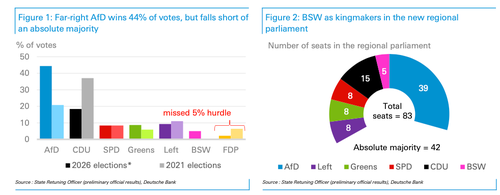
An unexpected surge for the far‑right Alternative für Deutschland reshapes Germany’s political calculus, prompting investors to reassess the stability of the country’s pro‑business agenda. The shift raises doubts about future fiscal discipline and could stall planned infrastructure spending, pressuring the DAX and other export‑oriented European equities. At the same time, heightened political risk may revive demand for safe‑haven assets such as the euro‑dollar and German bund yields, dampening risk‑on sentiment across broader markets. The development dovetails with broader macro concerns over populist backlash, slowing growth, and the EU’s ability to deliver cohesive policy responses, especially on energy transition and fiscal integration. Consequently, investor confidence may waver, prompting a more cautious risk appetite as market participants price in potential regulatory uncertainty and a possible re‑orientation of Germany’s role within the eurozone.
An unexpected surge for the far‑right Alternative für Deutschland reshapes Germany’s political calculus, prompting investors to reassess the stability of the country’s pro‑business agenda. The shift raises doubts about future fiscal discipline and could stall planned infrastructure spending, pressuring the DAX and other export‑oriented European equities. At the same time, heightened political risk may revive demand for safe‑haven assets such as the euro‑dollar and German bund yields, dampening risk‑on sentiment across broader markets. The development dovetails with broader macro concerns over populist backlash, slowing growth, and the EU’s ability to deliver cohesive policy responses, especially on energy transition and fiscal integration. Consequently, investor confidence may waver, prompting a more cautious risk appetite as market participants price in potential regulatory uncertainty and a possible re‑orientation of Germany’s role within the eurozone.

 or scan with phone →