crypto
◆ MixedImpact 55/100CoinTelegraph EthereumDec 25, 2025
Read original ↗
Ethereum in 2026: Glamsterdam and Hegota forks, L1 scaling and more
The roadmap for Ethereum includes perfect parallel processing, significant increases in the gas limit and the number of data blobs, and a transition of 10% of its network to ZK technology by 2026.
Key takeaway
"Ethereum in 2026: Glamsterdam and Hegota forks, L1 scaling and more" — BullBear's AI rates this story as a mixed, direction-neutral signal, with a market-impact score of 55 out of 100. The roadmap for Ethereum includes perfect parallel processing, significant increases in the gas limit and the number of data blobs, and a transition of 10% of its network to ZK technology by 2026. Reported by CoinTelegraph Ethereum on December 25, 2025. The call is verified against the actual 24-hour price move on BullBear's public conviction ledger.
Get the next high-impact catalyst
Telegram alerts when our AI scores a story 80+/100 impact (~1-3 per day, no spam).
Verified 30d hit rate 53.1%.
Rewritten: Digital Assets Decline as Bitcoin Falls Below $67,000.
The cryptocurrency market is experiencing another downturn as Bitcoin failed to break through the $67,000 mark.
The inability of Bitcoin to sustain its upward momentum above the $67,000 mark signals a potential continuation of bearish sentiment across the broader cryptocurrency market. This repeated failure to break key resistance levels can dampen investor confidence, leading to reduced risk appetite as traders become more cautious. The current market environment appears to be influenced by prevailing macro themes, such as inflation concerns and potential interest rate adjustments, which often lead investors to de-risk their portfolios. Such a shift can manifest as outflows from speculative assets like cryptocurrencies, further pressuring prices. The market's reaction to these price movements suggests a prevailing cautiousness, where short-term gains are met with skepticism, and a sustained move higher is required to rekindle significant bullish conviction.
Bitcoin has broken away from AI stocks, but a $96 oil price could turn its escape into a trap.
Bitcoin's recent decoupling from the performance of artificial intelligence-related equities suggests a shift in speculative drivers, potentially indicating a move away from tech-centric growth narratives. However, the resurgence of oil prices, specifically the breach of the $96 mark, introduces a significant macroeconomic headwind. Elevated energy costs can fuel inflationary pressures, prompting central banks to maintain or even tighten monetary policy, which typically dampens risk appetite across all asset classes. This renewed focus on inflation and interest rate sensitivity could undermine Bitcoin's recent independent rally, drawing it back into correlation with broader risk assets. Investor sentiment may become more cautious, prioritizing capital preservation over speculative gains, thereby reducing the appetite for assets perceived as higher risk, including cryptocurrencies. The interplay between these diverging market signals creates an uncertain environment for digital asset investors.
Rewritten: Bitcoin nears support as buying pressure fades.
Bitcoin price is testing channel support as momentum cools.
The cryptocurrency market is observing Bitcoin's price action as it approaches a significant support level within its established trading channel, coinciding with a noticeable cooling of momentum indicators. This development could signal a shift in broader market sentiment, potentially leading to increased caution among investors. Such price action often correlates with prevailing macro themes, particularly those concerning inflation, interest rate policies, and global economic uncertainty, which can influence risk appetite across asset classes. As Bitcoin, a bellwether for digital assets, tests these support levels, it may impact overall investor confidence, potentially prompting a more risk-averse stance and a re-evaluation of portfolio allocations away from speculative assets. The interplay between technical price action and these larger economic narratives will be crucial in determining the near-term trajectory of digital asset markets.
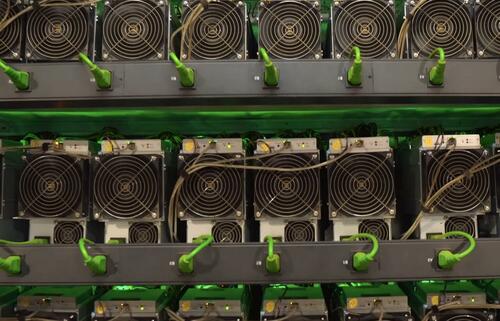
Bitcoin's difficulty adjustment mechanism, which occurs approximately every two weeks, recalibrates the mining difficulty to maintain a consistent block creation time. This process is crucial for the network's security and stability.
#crypto
Get the next 80+ impact catalyst
Push notifications when our AI flags a high-impact bull/bear story. ~1–3 per day.