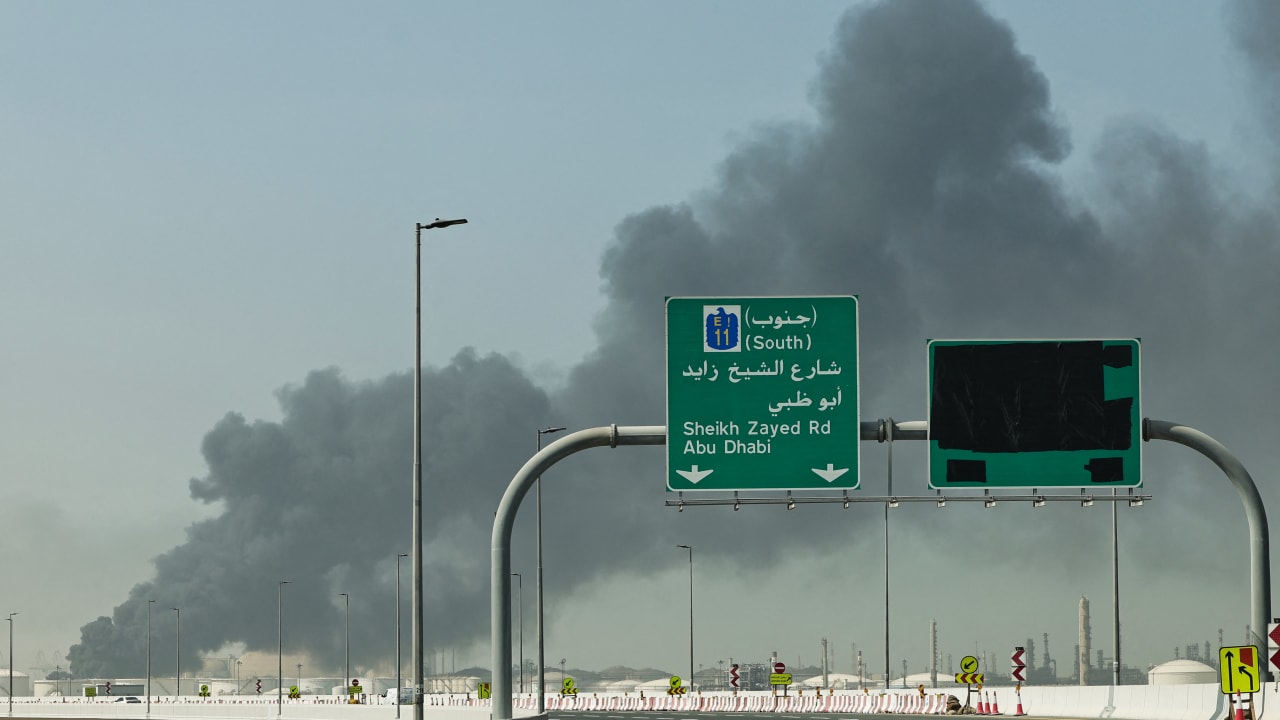
Why Iran fired most of its missiles at the UAE
AI comment — why bearish
A direct military confrontation targeting a key Gulf financial and logistics hub represents a severe escalation in regional tensions with immediate, far-reaching consequences. This would trigger a significant flight to safety, boosting haven assets like gold and U.S. Treasuries while punishing global equities. Market sentiment would sour dramatically as investors grapple with the dual threats of a major oil supply shock through the Strait of Hormuz and heightened geopolitical instability. This development feeds directly into macro concerns about persistent inflation and fragile supply chains, complicating the policy path for central banks facing stagflationary pressures. The resulting erosion of investor confidence would drastically reduce risk appetite, leading to a surge in volatility and a fundamental repricing of geopolitical risk across all asset classes, particularly in energy-dependent economies.
Key takeaway
"Why Iran fired most of its missiles at the UAE" — BullBear's AI rates this story as a bearish (negative) signal for markets, with a market-impact score of 85 out of 100. That score reflects how strongly the story is likely to move Bitcoin, US equities, the dollar, and gold, and near-duplicate coverage of the same event is clustered so only the representative article is scored. Reported by TheNewsAPI Stocks on March 03, 2026. The call is verified against the actual 24-hour price move on BullBear's public conviction ledger.
Catch the next bear flag
Telegram alerts when our AI scores a story 80+/100 impact (~1-3 per day, no spam). Verified 30d hit rate 44.0%.