Choose language / Korean

EN / 한
Bull/Bear Index 46.5/100
macro ◆ Mixed Impact 40/100 U.S. Federal Register 1d ago Read original ↗

NSCC Supplemental Liquidity Deposit Rules Enhanced and Approved

The Securities and Exchange Commission has approved the National Securities Clearing Corporation's (NSCC) proposed rule change to enhance its Supplemental Liquidity Deposit rules, methodology, and processes. This action aims to bolster market stability.

AI comment

The Securities and Exchange Commission's approval of the National Securities Clearing Corporation's (NSCC) proposed rule change regarding its Supplemental Liquidity Deposit rules signifies a procedural enhancement aimed at strengthening market resilience. While the specific details of the enhanced methodology and processes are not elaborated upon in this notice, the overarching goal is to improve the robustness of liquidity backstops within the clearinghouse. The direct market impact in the immediate 24-hour window is likely to be minimal, as this represents a regulatory adjustment rather than an immediate market event. However, over the longer term, these enhanced rules could contribute to greater stability during periods of market stress. Investors and market participants should monitor future NSCC communications for details on the implementation and operational impact of these revised liquidity deposit requirements.

Key takeaway

"NSCC Supplemental Liquidity Deposit Rules Enhanced and Approved" — BullBear's AI rates this story as a mixed, direction-neutral signal, with a market-impact score of 40 out of 100. The Securities and Exchange Commission has approved the National Securities Clearing Corporation's (NSCC) proposed rule change to enhance its Supplemental Liquidity Deposit rules, methodology, and processes. This action aims to bolster market stability. The Securities and Exchange Commission's approval of the National Securities Clearing Corporation's (NSCC) proposed rule change regarding its Supplemental Liquidity Deposit rules signifies a procedural enhancement aimed at strengthening market resilience. While the specific details of the enhanced methodology and processes are not elaborated upon in this notice, the overarching goal is to improve the robustness of liquidity backstops within the clearinghouse. The direct market impact in the immediate 24-hour window is likely to be minimal, as this represents a regulatory adjustment rather than an immediate market event. However, over the longer term, these enhanced rules could contribute to greater stability during periods of market stress. Investors and market participants should monitor future NSCC communications for details on the implementation and operational impact of these revised liquidity deposit requirements. That score reflects how strongly the story is likely to move Bitcoin, US equities, the dollar, and gold, and near-duplicate coverage of the same event is clustered so only the representative article is scored. Reported by U.S. Federal Register on August 18, 2026. The call is verified against the actual 24-hour price move on BullBear's public conviction ledger.

Get the next high-impact catalyst

Telegram alerts when our AI scores a story 80+/100 impact (~1-3 per day, no spam). Verified 30d hit rate 45.8%.


Join Telegram channel

📡 Tomorrow's Watch

Related news

▼ Bear
85/100
ZeroHedge 3h ago

Trump Posts Map Depicting Hormuz As 'New' US Territory, Just After Latest Tanker Attack By Iranians

Rewritten: Trump shares map labeling Hormuz as US territory after Iranian tanker attack

Disengagement: Trump Vows New Strategy To 'Strangle' Iran Over Time Summary No talks: Trump confirms US-Iran negotiations are off, vows to 'strangle them' over time. Hormuz attack: Tanker hit, injuring a crew member. Houthis escalate: Attacks shut Yemen’s Mokha port. Diplomacy stalled: Qatar says not mediating until Oman-Hormuz deal finalized. Iran hardens: Tehran says it maintains an offensive posture. <!--//--><![CDATA[// ><!-- <!--//--><![CDATA[// ><!-- <!--//--><![CDATA[// ><!-- { "@context": "https://schema.org", "@type": "WebPage", "name": "Strait of Hormuz traffic returns to normal by September 30?", "description": "Prediction market: Yes 9% · No 92% on Polymarket.", "url": "https://polymarket.com/event/strait-of-hormuz-traffic-returns-to-normal-by-september-30-20260702154339440", "publisher": { "@type": "Organization", "name": "Polymarket", "url": "https://polymarket.com" } } //--><!]]]]]]><![CDATA[><![CDATA[> //--><!]]]]><![CDAT

Geopolitical friction in the Strait of Hormuz, amplified by the provocative map and the recent Iranian tanker strike, is likely to reverberate across global markets. Energy prices, already sensitive to supply‑chain disruptions, could spike, pressuring inflation expectations and prompting central banks to maintain tighter monetary stances. The heightened risk of further naval confrontations may push equities, especially those with exposure to oil‑intensive sectors, into defensive territory while safe‑haven assets such as gold and the U.S. dollar gain appeal. Investor confidence may erode as the prospect of a broader escalation feeds uncertainty into corporate earnings forecasts and trade flows. Consequently, risk appetite could contract, with capital rotating away from emerging‑market equities and high‑yield credit toward more liquid, lower‑volatility instruments, reinforcing a bearish bias across risk‑on assets.

Geopolitical friction in the Strait of Hormuz, amplified by the provocative map and the recent Iranian tanker strike, is likely to reverberate across global markets. Energy prices, already sensitive to supply‑chain disruptions, could spike, pressuring inflation expectations and prompting central banks to maintain tighter monetary stances. The heightened risk of further naval confrontations may push equities, especially those with exposure to oil‑intensive sectors, into defensive territory while safe‑haven assets such as gold and the U.S. dollar gain appeal. Investor confidence may erode as the prospect of a broader escalation feeds uncertainty into corporate earnings forecasts and trade flows. Consequently, risk appetite could contract, with capital rotating away from emerging‑market equities and high‑yield credit toward more liquid, lower‑volatility instruments, reinforcing a bearish bias across risk‑on assets.

#macro
▼ Bear
75/100
ZeroHedge 7h ago

Germany Opens New Drone Security Center Amid Fears Of Russian Hybrid Warfare

Rewritten: Germany launches drone security center due to Russian hybrid warfare concerns.

The establishment of a new drone security center in Germany underscores escalating geopolitical tensions and a heightened focus on defense spending across Europe. This development signals a potential shift in capital allocation, with increased investment likely flowing into aerospace, cybersecurity, and defense technology sectors. Such a move can foster a more cautious market sentiment, as investors weigh the implications of prolonged regional instability and the growing threat of hybrid warfare tactics. This aligns with broader macro themes of deglobalization and a renewed emphasis on national security, potentially dampening overall investor confidence and reducing risk appetite. The perceived increase in systemic risk could lead to a preference for more defensive assets and a general aversion to speculative investments as markets adjust to this evolving threat landscape.

The establishment of a new drone security center in Germany underscores escalating geopolitical tensions and a heightened focus on defense spending across Europe. This development signals a potential shift in capital allocation, with increased investment likely flowing into aerospace, cybersecurity, and defense technology sectors. Such a move can foster a more cautious market sentiment, as investors weigh the implications of prolonged regional instability and the growing threat of hybrid warfare tactics. This aligns with broader macro themes of deglobalization and a renewed emphasis on national security, potentially dampening overall investor confidence and reducing risk appetite. The perceived increase in systemic risk could lead to a preference for more defensive assets and a general aversion to speculative investments as markets adjust to this evolving threat landscape.

#macro
▼ Bear
75/100
ZeroHedge 12h ago

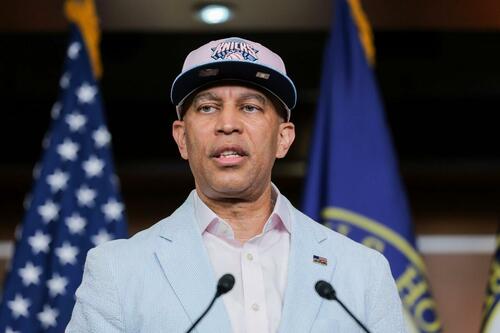
Minority Leader Jeffries Drops The Mask, Signals Democrats Are Coming For The Court

Rewritten: Minority Leader Jeffries signals Democrats will challenge the Supreme Court

Investors are likely to interpret the Democratic leader’s overt criticism of the judiciary as a signal that legislative battles over court composition could intensify, adding a layer of political risk to equity valuations. Heightened partisan friction often translates into volatility spikes, prompting risk‑averse participants to shift toward safer assets such as Treasuries or gold, while growth‑oriented sectors may see price pressure. The development dovetails with broader macro concerns about policy uncertainty, including fiscal spending debates and potential regulatory shifts that could affect corporate earnings forecasts. As market participants reassess the probability of disruptive legislative outcomes, confidence may erode, leading to a modest contraction in risk appetite and a re‑pricing of assets that are sensitive to legal and regulatory environments. Overall, the narrative reinforces a cautious tone across major indices, with investors weighing political headwinds against underlying economic fundamentals.

Investors are likely to interpret the Democratic leader’s overt criticism of the judiciary as a signal that legislative battles over court composition could intensify, adding a layer of political risk to equity valuations. Heightened partisan friction often translates into volatility spikes, prompting risk‑averse participants to shift toward safer assets such as Treasuries or gold, while growth‑oriented sectors may see price pressure. The development dovetails with broader macro concerns about policy uncertainty, including fiscal spending debates and potential regulatory shifts that could affect corporate earnings forecasts. As market participants reassess the probability of disruptive legislative outcomes, confidence may erode, leading to a modest contraction in risk appetite and a re‑pricing of assets that are sensitive to legal and regulatory environments. Overall, the narrative reinforces a cautious tone across major indices, with investors weighing political headwinds against underlying economic fundamentals.

#macro