Choose language / Korean

EN / 한
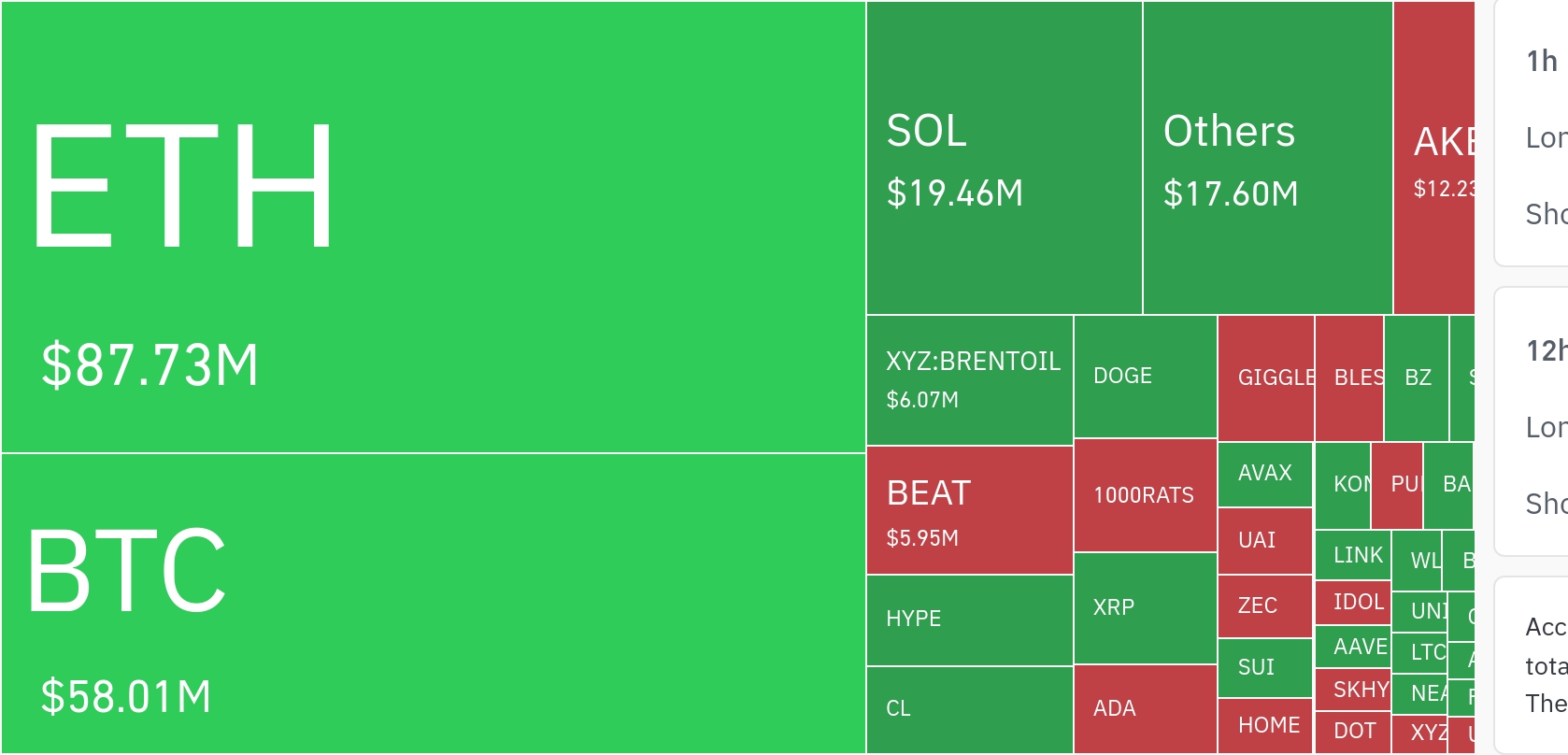
Crypto Market Sees $249,500 in Leveraged Positions Liquidated Over 24 Hours
Bull/Bear Index 48.1/100
crypto ▼ Bear Impact 55/100 TokenPost 2h ago Read original ↗

Crypto Market Sees $249,500 in Leveraged Positions Liquidated Over 24 Hours

The crypto market experienced approximately $249,500 in leveraged position liquidations over the past 24 hours, with long positions accounting for 66.8% of the total. Some assets saw liquidations of short positions driven by price increases.

Key takeaway

"Crypto Market Sees $249,500 in Leveraged Positions Liquidated Over 24 Hours" — BullBear's AI rates this story as a bearish (negative) signal for markets, with a market-impact score of 55 out of 100. The crypto market experienced approximately $249,500 in leveraged position liquidations over the past 24 hours, with long positions accounting for 66.8% of the total. Some assets saw liquidations of short positions driven by price increases. Reported by TokenPost on August 02, 2026. The call is verified against the actual 24-hour price move on BullBear's public conviction ledger.

5 more reports on this event

TokenPost Crypto Market Sees $194.25 Million in Leveraged Positions Liquidated in 24 Hours 1d ago TokenPost Crypto Market Sees Large-Scale Leverage Position Liquidations in 24 Hours 1d ago TokenPost Crypto Market Sees $289.69 Million in Leveraged Positions Liquidated in 24 Hours 1d ago TokenPost Crypto Market: $709.64 Million in Leveraged Positions Liquidated in 24 Hours 3d ago TokenPost Crypto Market Sees $1.91 Billion in Leveraged Positions Liquidated in 24 Hours 4d ago

Catch the next bear flag

Telegram alerts when our AI scores a story 80+/100 impact (~1-3 per day, no spam). Verified 30d hit rate 49.5%.

Join Telegram channel

📡 Tomorrow's Watch

Related news

▲ Bull
70/100
Google News Bitcoin (EN) 29m ago

Top Financial Institutions and Crypto Companies Just Formed a New Bitcoin Security Consortium. What Does That Mean for Bitcoin?

Rewritten: Bitcoin security boosted by new consortium of financial firms.

A new Bitcoin security consortium formed by top financial institutions and crypto companies aims to enhance security and foster trust within the Bitcoin ecosystem.

The formation of a new Bitcoin security consortium by prominent financial institutions and crypto firms signals a significant maturation of the digital asset ecosystem. This collaborative effort suggests an increased focus on institutional-grade security and regulatory compliance, potentially paving the way for broader adoption and integration into traditional finance. Such developments could bolster market sentiment by reducing perceived risks associated with Bitcoin's infrastructure. In the current macro environment, characterized by evolving digital asset regulations and a search for uncorrelated assets, this consortium's actions may align with a growing investor appetite for more secure and regulated digital investment opportunities. Ultimately, this initiative could enhance investor confidence by demonstrating a commitment to safeguarding digital assets, potentially encouraging a more measured and sustained risk appetite within the crypto market.

The formation of a new Bitcoin security consortium by prominent financial institutions and crypto firms signals a significant maturation of the digital asset ecosystem. This collaborative effort suggests an increased focus on institutional-grade security and regulatory compliance, potentially paving the way for broader adoption and integration into traditional finance. Such developments could bolster market sentiment by reducing perceived risks associated with Bitcoin's infrastructure. In the current macro environment, characterized by evolving digital asset regulations and a search for uncorrelated assets, this consortium's actions may align with a growing investor appetite for more secure and regulated digital investment opportunities. Ultimately, this initiative could enhance investor confidence by demonstrating a commitment to safeguarding digital assets, potentially encouraging a more measured and sustained risk appetite within the crypto market.

#crypto
▼ Bear
70/100
Google News Bitcoin (EN) 1h ago

Unlike the FTX collapse, the $89 million Coldcard exploit has investors sending bitcoin back to exchanges

Rewritten: Bitcoin investors return funds to exchanges after Coldcard exploit.

The $89 million Coldcard exploit is causing investors to send bitcoin back to exchanges, unlike the FTX collapse.

The recent $89 million Coldcard exploit, though smaller in scale than the FTX collapse, is prompting a notable shift in investor behavior, with some withdrawing Bitcoin from self-custody solutions and returning it to exchanges. This move suggests a re-evaluation of security protocols and a potential preference for centralized entities, however counterintuitive that may seem after past failures. The event could dampen sentiment around decentralized finance and hardware wallet security, potentially increasing volatility as investors seek perceived safety. In the current macro environment, characterized by persistent inflation and interest rate uncertainty, such a security scare adds another layer of risk aversion, further diminishing investor confidence and their appetite for speculative assets. This hesitancy might translate into reduced capital inflows into the crypto market, impacting liquidity and price discovery.

The recent $89 million Coldcard exploit, though smaller in scale than the FTX collapse, is prompting a notable shift in investor behavior, with some withdrawing Bitcoin from self-custody solutions and returning it to exchanges. This move suggests a re-evaluation of security protocols and a potential preference for centralized entities, however counterintuitive that may seem after past failures. The event could dampen sentiment around decentralized finance and hardware wallet security, potentially increasing volatility as investors seek perceived safety. In the current macro environment, characterized by persistent inflation and interest rate uncertainty, such a security scare adds another layer of risk aversion, further diminishing investor confidence and their appetite for speculative assets. This hesitancy might translate into reduced capital inflows into the crypto market, impacting liquidity and price discovery.

#crypto