macro
◆ MixedImpact 80/100Google News Macroecon...23d ago
Read original ↗
The Supreme Court gives Trump sweeping new powers to fire government employees but says the Federal Reserve is ‘protected’ - Yahoo Finance
The Supreme Court has granted Trump broad powers to fire government employees but stated the Federal Reserve is 'protected'.
Key takeaway
"The Supreme Court gives Trump sweeping new powers to fire government employees but says the Federal Reserve is ‘protected’ - Yahoo Finance" — BullBear's AI rates this story as a mixed, direction-neutral signal, with a market-impact score of 80 out of 100. The Supreme Court has granted Trump broad powers to fire government employees but stated the Federal Reserve is 'protected'. Reported by Google News Macroeconomics (EN) on June 29, 2026. The call is verified against the actual 24-hour price move on BullBear's public conviction ledger.
Get the next high-impact catalyst
Telegram alerts when our AI scores a story 80+/100 impact (~1-3 per day, no spam).
Verified 30d hit rate 53.1%.
Rewritten: Warsh's independent stance faces hawkish market and Fed.
Warsh's no-guidance approach confronts a hawkish world and hawkish Fed colleagues.
Federal Reserve Governor Michelle Bowman's recent remarks, emphasizing a commitment to price stability without offering forward guidance, signal a potentially prolonged period of elevated interest rates. This stance, diverging from the more data-dependent approach favored by some colleagues and the market's anticipation of rate cuts, introduces a layer of uncertainty. The broader market implications could include sustained volatility across asset classes as investors grapple with the Fed's unwavering focus on inflation. Market sentiment may shift towards caution, with a heightened awareness of the risks associated with sticky inflation and the potential for further tightening. This aligns with macro themes of persistent inflationary pressures and the challenges central banks face in achieving a soft landing. Consequently, investor confidence could be tested, leading to a more risk-averse environment as the prospect of prolonged higher rates dampens appetite for speculative investments.
Warsh’s Fed keeps quiet while inflation pressure builds.
The Federal Reserve's continued silence on escalating inflation pressures presents a growing dilemma for broader market participants. This inaction, or perceived lack of decisive response, is likely to foster a bearish sentiment as investors grapple with the possibility of persistent price increases eroding purchasing power. This situation directly connects to macro themes of stagflation, a scenario where economic growth stagnates while inflation accelerates, a historically challenging environment for asset classes. Consequently, investor confidence may wane, leading to a diminished risk appetite. As uncertainty mounts regarding the Fed's future policy trajectory and its effectiveness in taming inflation, capital may shift towards perceived safer havens, impacting equity valuations and bond yields. The market is left to anticipate whether a more aggressive stance will eventually be adopted, or if the current inflationary trend will prove more entrenched than initially anticipated.
US investors rethink bonds' role as inflation reshapes portfolios.
The persistent inflationary environment is forcing a fundamental reassessment of fixed income's traditional diversification benefits within US portfolios. This shift suggests a potential recalibration of asset allocation strategies, as investors seek alternatives to hedge against eroding purchasing power and rising interest rates. Consequently, market sentiment may lean towards increased caution, with a heightened focus on real assets and growth-oriented equities that historically offer better inflation protection. This evolving landscape is intrinsically linked to the broader macro themes of supply chain disruptions, geopolitical instability, and the Federal Reserve's monetary policy tightening cycle. As a result, investor confidence could be tested, potentially leading to a more risk-averse stance and a reduced appetite for speculative investments as the perceived safety net of bonds becomes less reliable.
Rewritten: Oil price surge sparks global bond yield rise, inflation worries.
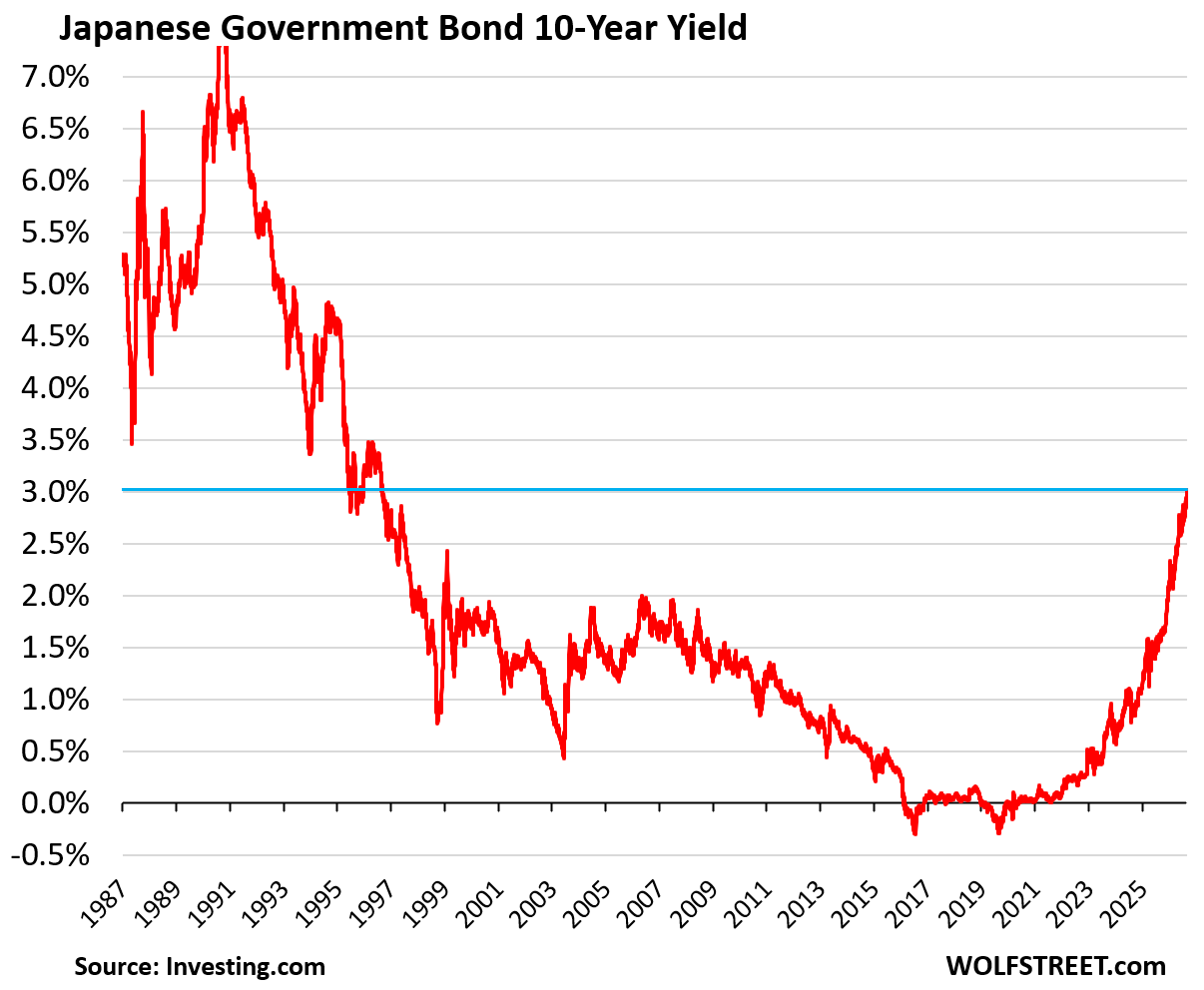
Global Bond Yields Jump as Oil Prices Surge, Inflation Fears Mount.
Soaring oil prices are injecting a potent dose of inflation anxiety into global financial markets, prompting a significant uptick in bond yields. This upward pressure on borrowing costs suggests investors are demanding higher compensation for the erosion of purchasing power, a sentiment that casts a shadow over equity valuations. The interconnectedness of energy prices and inflation creates a challenging macroeconomic backdrop, potentially dampening investor confidence and fostering a more cautious risk appetite. As inflationary pressures become more entrenched, the prospect of prolonged higher interest rates could weigh on economic growth, leading to a reassessment of asset allocations and a preference for more defensive strategies. This environment necessitates a keen awareness of the evolving inflation narrative and its implications for various asset classes.
#macro
Get the next 80+ impact catalyst
Push notifications when our AI flags a high-impact bull/bear story. ~1–3 per day.