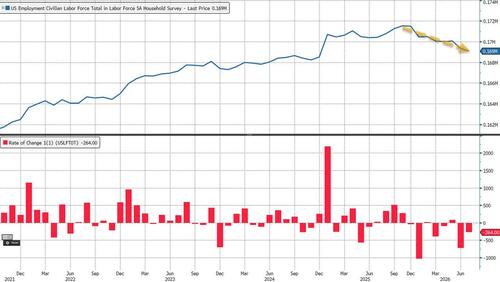
Bank Of America: The US Unemployment Rate Is Falling Because Americans Are Too Rich
How this call is verified
▼ Bearish call was checked against the actual S&P 500 price 24h later: — Flat (+0.27%, below the ±0.3% bar).
Our record on calls like this
1,256 scored calls here, 46.3% right (±9.3pp). Always answering up would have scored 62.5% — so we are -16.2pp.
Bar: S&P 500 ±0.3% within 24h · every verdict lands on the public ledger
AI comment — why bearish
Bank of America's analysis suggests the declining U.S. unemployment rate reflects elevated household wealth and consumption patterns rather than fundamental labor market strength or robust job creation. This dynamic implies underlying economic fragility, as the apparent stability masks structural imbalances within the labor market and consumption base. Consequently, persistent wage-driven inflation pressures may continue despite softening labor demand, complicating central bank policy decisions and likely extending restrictive monetary conditions. Market participants may grow cautious, recognizing the low unemployment rate as a temporary phenomenon driven by high disposable income rather than sustainable employment growth. This perception could dampen risk appetite for cyclical assets, increase market volatility, and encourage defensive positioning amid heightened macroeconomic uncertainty, potentially signaling a less durable economic expansion than current data might suggest. (148 words)
Key takeaway
"Bank Of America: The US Unemployment Rate Is Falling Because Americans Are Too Rich" — BullBear's AI rates this story as a bearish (negative) signal for markets, with a market-impact score of 65 out of 100. Bank of America's analysis suggests the declining U.S. unemployment rate reflects elevated household wealth and consumption patterns rather than fundamental labor market strength or robust job creation. This dynamic implies underlying economic fragility, as the apparent stability masks structural imbalances within the labor market and consumption base. Consequently, persistent wage-driven inflation pressures may continue despite softening labor demand, complicating central bank policy decisions and likely extending restrictive monetary conditions. Market participants may grow cautious, recognizing the low unemployment rate as a temporary phenomenon driven by high disposable income rather than sustainable employment growth. This perception could dampen risk appetite for cyclical assets, increase market volatility, and encourage defensive positioning amid heightened macroeconomic uncertainty, potentially signaling a less durable economic expansion than current data might suggest. (148 words) That score reflects how strongly the story is likely to move Bitcoin, US equities, the dollar, and gold, and near-duplicate coverage of the same event is clustered so only the representative article is scored. Reported by ZeroHedge on August 12, 2026. The call is verified against the actual 24-hour price move on BullBear's public conviction ledger.
Catch the next bear flag
Telegram alerts when our AI scores a story 80+/100 impact (~1-3 per day, no spam). Verified 30d hit rate 46.3%.