Choose language / Korean

EN / 한
Fed’s Daly Supported Rate Decision, Warns of Inflation Risks - Bloomberg.com
Bull/Bear Index 48.5/100
macro ▼ Bear Impact 85/100 Google News Macroecon... 1d ago Read original ↗

Fed’s Daly Supported Rate Decision, Warns of Inflation Risks - Bloomberg.com

How this call is verified

▼ Bearish call was checked against the actual S&P 500 price 24h later: — Flat (-0.16%, below the ±0.3% bar).

Our record on calls like this

1,223 scored calls here, 46.5% right (±9.6pp). Always answering up would have scored 61.8% — so we are -15.3pp.

Bar: S&P 500 ±0.3% within 24h · every verdict lands on the public ledger

AI comment — why bearish

The recent monetary policy actions, coupled with pronouncements from Federal Reserve officials, signal an ongoing commitment to addressing inflationary pressures. This sustained focus on price stability suggests that restrictive policy measures may remain in place, influencing investor sentiment towards a more cautious outlook. The persistent concern over inflation, even amidst policy adjustments, could translate into subdued consumer demand and tempered business expansion plans. Such macroeconomic conditions may lead to a reevaluation of asset valuations and a potential shift in portfolio allocations. Investors might prioritize capital preservation and seek out investments perceived as less susceptible to economic downturns, potentially reducing engagement with higher-risk assets as the economic landscape adapts to these policy priorities.

Key takeaway

"Fed’s Daly Supported Rate Decision, Warns of Inflation Risks - Bloomberg.com" — BullBear's AI rates this story as a bearish (negative) signal for markets, with a market-impact score of 85 out of 100. The recent monetary policy actions, coupled with pronouncements from Federal Reserve officials, signal an ongoing commitment to addressing inflationary pressures. This sustained focus on price stability suggests that restrictive policy measures may remain in place, influencing investor sentiment towards a more cautious outlook. The persistent concern over inflation, even amidst policy adjustments, could translate into subdued consumer demand and tempered business expansion plans. Such macroeconomic conditions may lead to a reevaluation of asset valuations and a potential shift in portfolio allocations. Investors might prioritize capital preservation and seek out investments perceived as less susceptible to economic downturns, potentially reducing engagement with higher-risk assets as the economic landscape adapts to these policy priorities. That score reflects how strongly the story is likely to move Bitcoin, US equities, the dollar, and gold, and near-duplicate coverage of the same event is clustered so only the representative article is scored. Reported by Google News Macroeconomics (EN) on August 06, 2026. The call is verified against the actual 24-hour price move on BullBear's public conviction ledger.

Catch the next bear flag

Telegram alerts when our AI scores a story 80+/100 impact (~1-3 per day, no spam). Verified 30d hit rate 49.3%.

Join Telegram channel

📡 Tomorrow's Watch

Related news

▼ Bear
65/100
ZeroHedge 1h ago

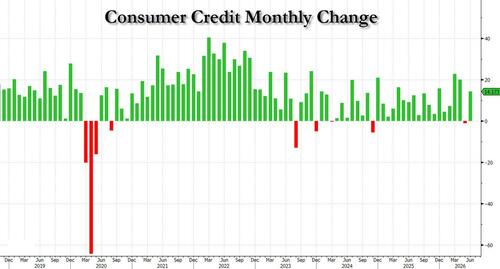
Consumer Credit Jumps More Than Expected In June As Credit Card Debt Spikes

Rewritten: Consumer credit rose sharply in June, driven by credit card debt.

The recent acceleration in consumer credit, notably fueled by a significant increase in credit card debt, indicates a growing dependence on borrowed money to sustain household expenditures. This pattern may point to underlying economic challenges, potentially affecting corporate profitability due to increased interest expenses for consumers. A more cautious market outlook could emerge as elevated debt levels introduce greater financial vulnerability and could restrain future consumer spending. This observation is consistent with broader economic considerations surrounding inflation and the path of interest rates, with monetary authorities observing such data for indications of economic stress. As a result, investor sentiment may become more reserved, prompting a move towards risk mitigation and a potential reassessment of asset values as the long-term viability of current spending habits is scrutinized.

The recent acceleration in consumer credit, notably fueled by a significant increase in credit card debt, indicates a growing dependence on borrowed money to sustain household expenditures. This pattern may point to underlying economic challenges, potentially affecting corporate profitability due to increased interest expenses for consumers. A more cautious market outlook could emerge as elevated debt levels introduce greater financial vulnerability and could restrain future consumer spending. This observation is consistent with broader economic considerations surrounding inflation and the path of interest rates, with monetary authorities observing such data for indications of economic stress. As a result, investor sentiment may become more reserved, prompting a move towards risk mitigation and a potential reassessment of asset values as the long-term viability of current spending habits is scrutinized.

#macro
▼ Bear
75/100
ZeroHedge 2h ago

Senate Passes The Lindsey O. Graham Sanctioning Russia & Iran Act Of 2026

Rewritten: Senate Approves Sanctions Act Targeting Russia and Iran

The recent legislative development concerning sanctions against Russia and Iran introduces a notable element of geopolitical complexity that may influence overall market sentiment. An escalation in sanctions typically reflects heightened international friction, which can have ripple effects across vital economic sectors, particularly energy and global supply networks. This heightened risk environment can erode investor confidence, as it introduces unforeseen challenges and complicates predictive analysis for businesses operating within or connected to the affected geographies. As a result, a reduction in risk tolerance is a plausible market reaction, potentially leading to a reallocation of capital towards assets perceived as more secure. This legislative action highlights the persistent connection between international relations and financial market dynamics, emphasizing the importance of monitoring geopolitical developments.

The recent legislative development concerning sanctions against Russia and Iran introduces a notable element of geopolitical complexity that may influence overall market sentiment. An escalation in sanctions typically reflects heightened international friction, which can have ripple effects across vital economic sectors, particularly energy and global supply networks. This heightened risk environment can erode investor confidence, as it introduces unforeseen challenges and complicates predictive analysis for businesses operating within or connected to the affected geographies. As a result, a reduction in risk tolerance is a plausible market reaction, potentially leading to a reallocation of capital towards assets perceived as more secure. This legislative action highlights the persistent connection between international relations and financial market dynamics, emphasizing the importance of monitoring geopolitical developments.

#macro
▼ Bear
75/100
ZeroHedge 3h ago

Trump Threatens To Jail Arms Shortage 'Leakers'

Rewritten: Trump vows jail for arms shortage information leaks.

Statements indicating potential legal consequences for the disclosure of information, especially concerning vital industries such as arms manufacturing, can contribute to an atmosphere of increased apprehension. This climate may foster a more reserved market outlook as participants assess the ramifications of possible governmental actions and restrictions on the flow of data. These developments intersect with broader macroeconomic discussions concerning national security imperatives, the robustness of supply chains, and the extent of governmental influence over essential sectors. As a result, investor assurance could be affected, potentially diminishing a willingness to engage in riskier investments due to perceived instability in the investment environment stemming from unpredictable regulatory measures and a reduction in transparency.

Statements indicating potential legal consequences for the disclosure of information, especially concerning vital industries such as arms manufacturing, can contribute to an atmosphere of increased apprehension. This climate may foster a more reserved market outlook as participants assess the ramifications of possible governmental actions and restrictions on the flow of data. These developments intersect with broader macroeconomic discussions concerning national security imperatives, the robustness of supply chains, and the extent of governmental influence over essential sectors. As a result, investor assurance could be affected, potentially diminishing a willingness to engage in riskier investments due to perceived instability in the investment environment stemming from unpredictable regulatory measures and a reduction in transparency.

#macro
▲ Bull
70/100
ZeroHedge 4h ago

5th Small Modular Reactor Validated Since June, Poised For Mass Production

Rewritten: Fifth SMR approved, ready for large-scale manufacturing.

The accelerating validation of Small Modular Reactors (SMRs) signals a tangible shift in the energy sector's future, potentially unlocking significant investment opportunities across the nuclear supply chain, from specialized engineering firms to material suppliers. This progress injects a dose of optimism into markets, suggesting a more predictable and scalable path toward next-generation nuclear power, which aligns with global decarbonization efforts and energy security macro themes. Increased confidence in SMR technology's viability could bolster investor sentiment towards clean energy infrastructure, potentially broadening risk appetite for companies involved in its development and deployment. The successful integration of these advanced reactors into the grid infrastructure represents a concrete step towards a diversified and resilient energy future, fostering greater investor assurance in long-term technological advancements.

The accelerating validation of Small Modular Reactors (SMRs) signals a tangible shift in the energy sector's future, potentially unlocking significant investment opportunities across the nuclear supply chain, from specialized engineering firms to material suppliers. This progress injects a dose of optimism into markets, suggesting a more predictable and scalable path toward next-generation nuclear power, which aligns with global decarbonization efforts and energy security macro themes. Increased confidence in SMR technology's viability could bolster investor sentiment towards clean energy infrastructure, potentially broadening risk appetite for companies involved in its development and deployment. The successful integration of these advanced reactors into the grid infrastructure represents a concrete step towards a diversified and resilient energy future, fostering greater investor assurance in long-term technological advancements.

#macro
▼ Bear
65/100
ZeroHedge 5h ago

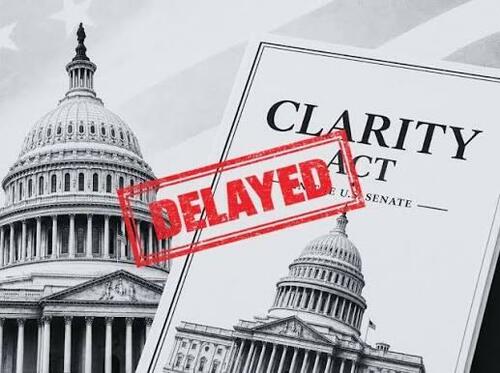
US Senate Pushes CLARITY Act Vote To September

Rewritten: Senate delays CLARITY Act vote until September.

The postponement of the CLARITY Act vote in the US Senate introduces a period of extended uncertainty for the digital asset sector. This delay could dampen speculative interest and temper risk appetite among investors who were anticipating potential regulatory frameworks. The lack of definitive legislative action on cryptocurrency regulation continues to align with broader macro themes of cautious economic navigation, as policymakers grapple with evolving financial landscapes. This prolonged ambiguity may foster a more risk-averse sentiment, potentially leading to reduced capital inflows into digital asset markets and a more discerning approach from institutional players. The extended waiting period for regulatory clarity could therefore weigh on market sentiment, as the path forward for digital assets remains subject to further deliberation and political timelines.

The postponement of the CLARITY Act vote in the US Senate introduces a period of extended uncertainty for the digital asset sector. This delay could dampen speculative interest and temper risk appetite among investors who were anticipating potential regulatory frameworks. The lack of definitive legislative action on cryptocurrency regulation continues to align with broader macro themes of cautious economic navigation, as policymakers grapple with evolving financial landscapes. This prolonged ambiguity may foster a more risk-averse sentiment, potentially leading to reduced capital inflows into digital asset markets and a more discerning approach from institutional players. The extended waiting period for regulatory clarity could therefore weigh on market sentiment, as the path forward for digital assets remains subject to further deliberation and political timelines.

#macro
▼ Bear
85/100
MishTalk 5h ago

Another Weak Jobs Report, Payrolls Down 23,000 and Employment Down 87,000

Rewritten: Job growth falters, payrolls and employment decline.

The recent labor market data, showing a decrease in both payrolls and overall employment, indicates a notable cooling in economic activity. This contraction suggests that the labor sector may be experiencing headwinds, potentially signaling a broader deceleration in the economy. Such a development could lead to a recalibration of market sentiment, with a heightened focus on recessionary risks rather than continued expansion. Market participants may view this as a tangible consequence of restrictive monetary policies, underscoring concerns about persistent inflation and the central bank's resolve to address it, irrespective of potential economic repercussions. This could foster a more cautious investment environment, characterized by diminished risk tolerance and a potential reallocation towards assets perceived as less susceptible to economic downturns, thereby increasing market fluctuations and impacting equity valuations.

The recent labor market data, showing a decrease in both payrolls and overall employment, indicates a notable cooling in economic activity. This contraction suggests that the labor sector may be experiencing headwinds, potentially signaling a broader deceleration in the economy. Such a development could lead to a recalibration of market sentiment, with a heightened focus on recessionary risks rather than continued expansion. Market participants may view this as a tangible consequence of restrictive monetary policies, underscoring concerns about persistent inflation and the central bank's resolve to address it, irrespective of potential economic repercussions. This could foster a more cautious investment environment, characterized by diminished risk tolerance and a potential reallocation towards assets perceived as less susceptible to economic downturns, thereby increasing market fluctuations and impacting equity valuations.

#macro